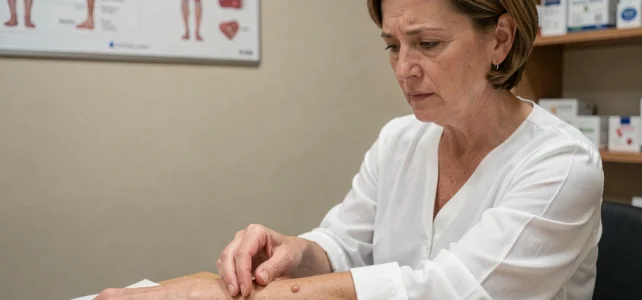
A firm bump appears under the skin, red, warm, and sometimes painful to the touch. This type of lesion has a specific name in dermatology: the inflammatory nodule. It is not just a simple pimple. Its size often exceeds one centimeter, and it resides in the deeper layers of the skin, even in the subcutaneous fatty tissue. Several diseases, sometimes unrelated to dermatology, can trigger its appearance.
Skin Nodules and Digestive Diseases: An Unknown Warning Signal
Have you ever noticed that some diseases affect very different organs at the same time? Chronic inflammatory bowel diseases (IBD) are a good example. Crohn’s disease and ulcerative colitis cause digestive symptoms, but also skin manifestations.
Erythema nodosum is the most common of these skin conditions associated with IBD. It appears as red and tender nodules on the legs, sometimes on the arms. These nodules are not trivial: their appearance may reflect a flare-up of the underlying bowel disease.
Specifically, when a patient with Crohn’s sees painful bumps appear on their shins, the gastroenterologist sees it as a marker of disease activity. Treating the digestive inflammation then helps reduce the skin nodules. This “digestive alarm signal” aspect of an inflammatory skin nodule remains little known to the general public.
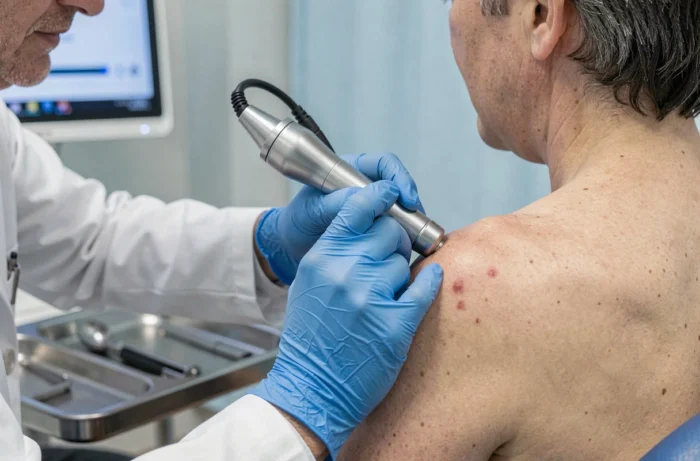
Infections and Erythema Nodosum: When a Microbe Triggers the Reaction
Erythema nodosum is not always linked to an autoimmune disease. In many cases, a bacterial, fungal, or viral infection is the trigger. The mechanism is indirect: the immune system reacts excessively to the infectious agent, and this reaction results in inflammation of the fatty tissue under the skin.
Streptococcal infections are among the most common causes of erythema nodosum in France. A simple sore throat can be enough to cause painful nodules on the legs to appear a few weeks later. Other infections are also involved:
- Deep mycoses (fungal infections) can trigger a nodular reaction, especially in immunocompromised patients.
- Some viral infections cause a transient erythema nodosum, which disappears with the resolution of the initial infection.
- Tuberculosis, although it has become rare in Europe, remains a classic cause of inflammatory nodules in regions where it is still circulating.
One key point to remember: the nodule itself is not infected. It does not contain bacteria. It is the immune response to the microbe, elsewhere in the body, that causes the skin inflammation.
Neutrophilic Dermatoses: Nodules That Are Primarily Painful
Some lesser-known skin diseases manifest directly as inflammatory nodules. Sweet’s syndrome and pyoderma gangrenosum belong to a family called neutrophilic dermatoses. The name comes from neutrophils, a type of white blood cell that invades the skin and causes intense inflammation.
Sweet’s Syndrome and Inflammatory Nodules
Sweet’s syndrome is characterized by red, painful plaques and nodules, often febrile. It sometimes occurs after a respiratory infection, but it can also accompany a hematological disorder (blood disease) or an inflammatory joint disease. The lesions appear suddenly, within a few days.
Pyoderma Gangrenosum: From Nodule to Ulcer
Pyoderma gangrenosum often starts with an inflammatory nodule or pustule before evolving into a painful ulceration. It is frequently associated with IBD, inflammatory arthritis, or certain hematological diseases. Its peculiarity: a minor skin trauma can trigger a new lesion, a phenomenon called pathergy.
These two diseases are rarely mentioned in popular articles about nodules. They deserve to be known because an early diagnosis radically changes management.
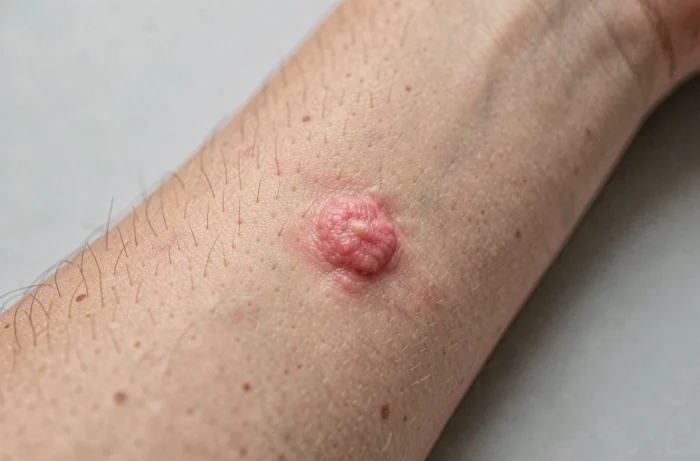
Nodular Prurigo, Hidradenitis, and Psoriasis: Other Diseases Involved
Not all diseases with nodules operate under the same mechanism. Nodular prurigo, for example, is linked to a combined dysregulation of the immune system and the neurological system. It manifests as extremely itchy nodules, sometimes numbering in the hundreds, symmetrically distributed across the body. The itching is so intense that it profoundly affects the patients’ quality of life.
Suppurative hidradenitis (or Verneuil’s disease) causes recurrent inflammatory nodules in skin folds: armpits, groin, and intergluteal fold. These lesions can evolve into abscesses and fistulas, with considerable social repercussions.
Psoriasis, especially in its severe forms, can also generate nodular lesions. The chronic inflammation of the skin produces thick plaques that, in certain locations, take on a nodular appearance. The diagnosis then relies on clinical examination and sometimes skin biopsy.
- Nodular prurigo: symmetrical nodules, severe itching, linked to type 2 inflammation.
- Suppurative hidradenitis: nodules in folds, frequent recurrences, risk of abscesses.
- Nodular psoriasis: thick plaques that may mimic nodules, differential diagnosis to be confirmed by biopsy.
Diagnosis of Inflammatory Nodules: Why to Consult Quickly
An isolated inflammatory nodule may correspond to a benign cyst. However, recurring or multiple nodules point towards a systemic disease. The doctor then looks for associated signs: fever, joint pain, digestive issues, unusual fatigue.
Skin biopsy remains the reference examination to differentiate the causes. It allows distinguishing between panniculitis (inflammation of the fatty tissue) and vasculitis (involvement of blood vessels) or infiltration by specific inflammatory cells. Blood tests and a chest X-ray often complement the assessment.
The appearance of inflammatory skin nodules should not be trivialized. Behind a visible lesion sometimes lies an inflammatory, infectious, or hematological disease that requires targeted treatment. Consulting a dermatologist allows for a precise diagnosis and prevents the underlying disease from progressing without appropriate management.