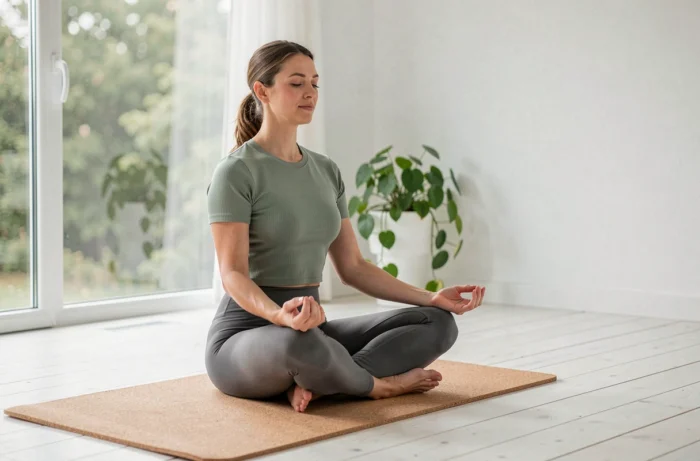
Yoga refers to a set of postural, breathing, and meditative techniques whose primary goal is to synchronize movement and breath. This coordination simultaneously affects muscle tone, nerve regulation, and mental clarity. Understanding these mechanisms allows for the selection of an appropriate practice and the realization of measurable benefits in daily life.
Stress Regulation through Yoga: What Recent Clinical Trials Show
Most articles on yoga mention stress reduction without specifying the physiological mechanisms involved. The main lever operates through the autonomic nervous system: slow breathing exercises (deep inhalations, prolonged exhalations) activate the vagus nerve, which lowers heart rate and circulating cortisol levels.
A recent clinical trial conducted via a mobile app among employees experiencing moderate to high stress compared a tailored yoga program to a self-care program based on cognitive-behavioral therapy principles. The results show that yoga significantly and sustainably improves depressive symptoms and stress responses compared to cognitive-behavioral therapy alone.
This finding has a direct practical implication: for individuals subjected to chronic work pressure, a few structured weekly sessions focused on breathing and gentle postures produce mental health effects that go beyond simple occasional relaxation. Specialized resources like lesjardinsduyoga.fr help find practice formats suited to these goals.
Postures and Breathing: The Two Technical Pillars of Yoga
Discussing the benefits of yoga without distinguishing its two fundamental components is akin to confusing the tool with the result. Each session relies on the interaction between postures (asanas) and breath control (pranayama).
How Postures Affect Deep Muscles
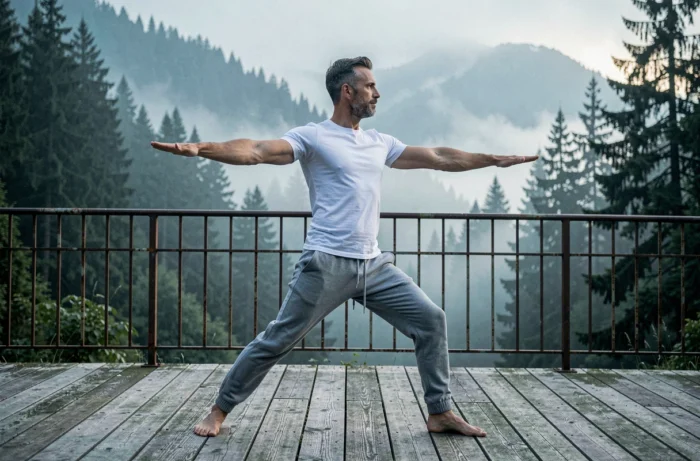
Asanas engage muscle chains that are rarely activated in daily movements. The prolonged maintenance of a posture like plank or warrior engages the stabilizing muscles of the trunk, pelvis, and shoulders.
Unlike traditional strength training that targets isolated muscle groups, yoga works through complete chains. The resulting strengthening improves standing and sitting posture, reduces joint compensations, and decreases cervical tension related to sedentary work.
Pranayama, a Standalone Breathing Technique
Pranayama is not just about “breathing well.” It consists of codified exercises with precise rhythms:
- Alternate nostril breathing (nadi shodhana) involves inhaling through one nostril and exhaling through the other, balancing the activity of both cerebral hemispheres and reducing mental agitation.
- Deep abdominal breathing extends the exhalation time, directly stimulating the parasympathetic system responsible for relaxation.
- Ujjayi breathing, characterized by a slight contraction of the glottis, slows the airflow and increases concentration during posture sequences.
These breathing techniques explain why yoga affects sleep and anxiety management: voluntary breath regulation trains the body to transition more easily into a state of rest.
Yoga and Sustainable Well-Being: Why Consistency Makes All the Difference
A study conducted in 2026 in the higher education sector integrated yoga into a positive psychology program at work over a duration of 18 to 36 weeks. Participants showed an improvement in overall mental health, emotional well-being, and vigor at work, accompanied by a moderate decrease in perceived stress.
The most informative point of this study concerns the post-program period: the benefits tend to decrease within 12 weeks following the cessation of practice. This observation confirms that yoga functions as regular training, not as a one-time treatment.
Frequency and Duration of Sessions: Concrete Guidelines
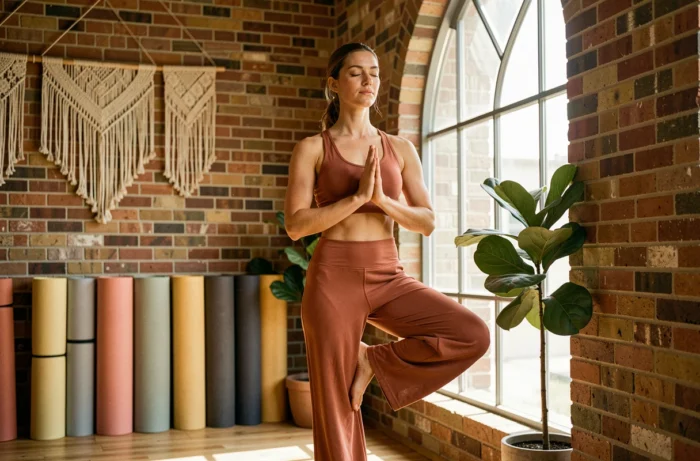
Expecting results from a monthly session would be unrealistic. The protocols studied in recent clinical trials generally rely on two to three sessions per week, lasting between 30 and 60 minutes. Each session combines postures, breathing, and a final meditation or relaxation time.
For beginners, starting with short sessions focused on breathing and a few basic postures is sufficient to initiate the first effects on sleep quality and muscle tension reduction. Gradually increasing the duration and complexity of postures helps prevent injuries and maintain motivation.
Digital Yoga: Practicing via an App, Good or Bad Idea
The development of yoga programs delivered through mobile apps has opened wide access to practice, including for those far from studios or with constrained schedules. The clinical trial on stressed employees mentioned earlier specifically used this digital format, with significant results on depressive symptoms.
Digital yoga offers specific advantages:
- Flexible scheduling allows for maintaining consistency, a necessary condition for lasting effects.
- Adaptive programs adjust difficulty according to the declared level, limiting the risk of poorly executed postures.
- Integrated tracking (reminders, practice history) reinforces commitment over several weeks.
The main limitation remains the absence of real-time postural correction. An instructor can immediately spot a pelvic imbalance or excessive arch that the screen cannot capture. Alternating studio sessions and digital practice is a realistic compromise for those seeking both autonomy and technical safety.
Yoga produces verified effects on stress management, muscle tone, and sleep quality, provided that regular practice is maintained. Recent data on the attenuation of benefits after cessation serve as a simple reminder: the body and mind respond to what is offered repeatedly, not to what is imposed just once.