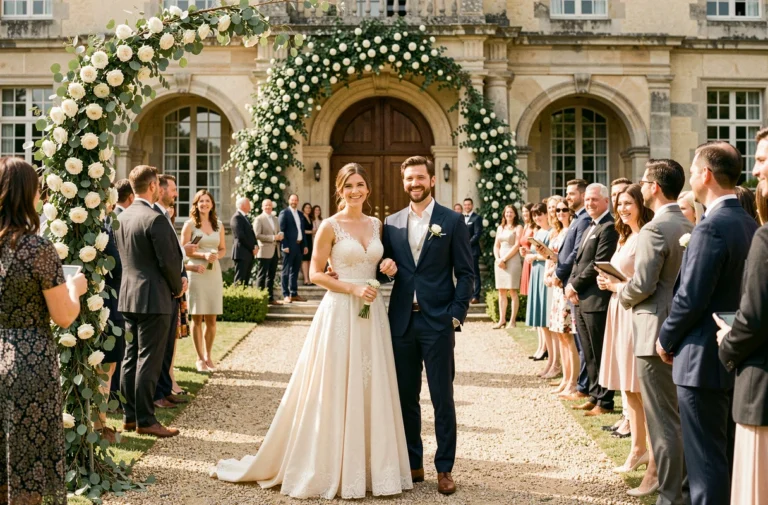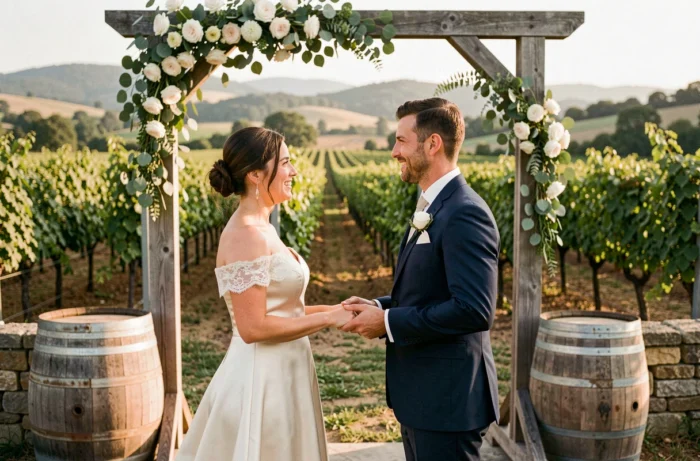
Organizing a wedding means making hundreds of decisions in just a few months. The risk is getting lost in logistical details and forgetting what makes the day memorable for both the couple and the guests. A few well-placed decisions from the start can change the quality of the final experience much more than a long list of tasks checked off mechanically.
Multi-day wedding: the experience that replaces the classic reception
Have you noticed that after a wedding, guests mostly talk about the brunch the next day or the evening before? It’s no coincidence. According to the Vows & Venues barometer conducted by Hyatt in France, more than half of couples want to extend the festivities beyond just the evening. The weekend format, with a brunch the next day favored by 56% of respondents, is becoming a standard.
This change in format has direct practical consequences. A wedding spread over two days requires a venue that allows on-site accommodation, or at least a nearby group accommodation solution. It also encourages a rethink of the budget: instead of investing everything in a single evening, spreading expenses over two key moments creates a more relaxed experience for everyone.
In practical terms, the next day’s brunch costs much less per person than a seated dinner. A simple buffet at the end of the morning allows guests to gather in a calm atmosphere, away from the pressure of the big day. It’s often when the most sincere exchanges take place. If you’re looking for everything on the Instant Mariage site, you’ll find concrete ideas for structuring this type of extended organization.
Wedding budget: the trade-off between guest count and venue quality
The classic reflex is to set a global budget and then divide it by category (caterer, venue, photography, flowers). This approach works, but it masks the real question: how many guests are you willing to sacrifice for the venue you want?
The Vows & Venues barometer reveals that young couples, particularly those aged 18-34, now prefer upscale venues with fewer guests. Nearly one in three young people chooses a 5-star hotel or a historic property over a banquet hall. To absorb this cost, they intentionally reduce the guest list.
This calculation deserves to be laid out clearly before any booking:
- A prestigious venue with 60 guests can cost the same as a classic hall with 120 guests, but the experience per person will be radically different
- The caterer represents the most variable cost depending on the number of guests, making it the first adjustment variable
- Fixed costs (photographer, officiant, floral decoration of the venue) remain the same regardless of the number of guests, which benefits smaller groups in cost per head
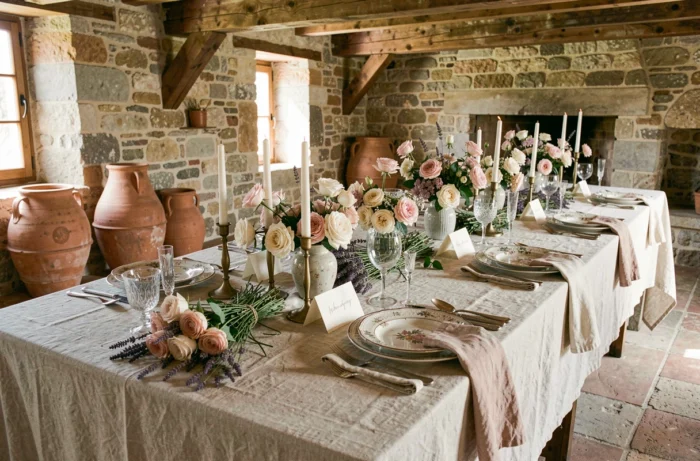
Why does this choice matter so much? Because the venue shapes the overall atmosphere of the day. A castle with endless gardens does not create the same memory as a marquee set in a field, even if the caterer is the same. It’s an emotional choice as much as a financial one.
Civil ceremony: structuring a personal moment without falling into improvisation
The civil ceremony is now chosen by an increasing proportion of couples who want a tailored moment, distinct from the obligatory visit to the town hall. The idea is appealing, but the result depends entirely on the preparation.
The most common pitfall is entrusting speeches to relatives without a clear framework. A best man’s speech of five minutes can turn into a twenty-minute monologue. A reading chosen the night before can sound off. Each intervention must be timed and rehearsed at least once.
What distinguishes a successful civil ceremony
A civil ceremony officiant (professional or not) structures the proceedings into blocks: welcome, couple’s story, speeches from loved ones, exchange of vows, symbolic ritual. This sequencing avoids dead time and gives a rhythm to the whole.
The choice of symbolic ritual (sand, wine, candle, tree planting) is not just a matter of taste. It serves a practical function: it creates a visual moment that the photographer captures and that guests remember. Without this anchor point, the ceremony risks resembling a series of speeches.
Procession, witnesses, and bridesmaids: the concrete roles to assign
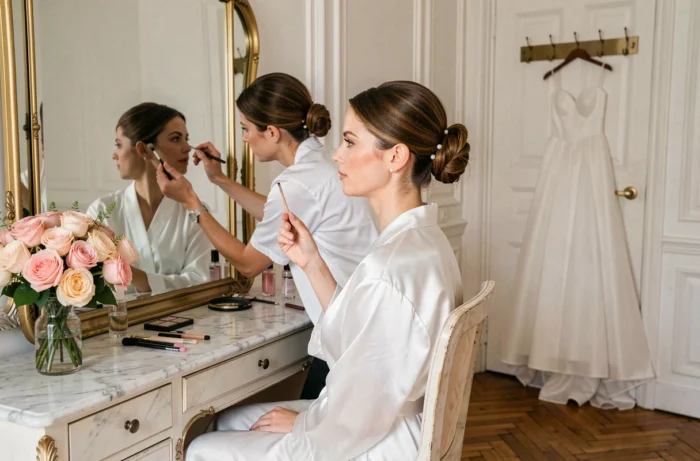
Assigning roles on the wedding day is not about tradition for tradition’s sake. Each assigned role is one less task for the couple on the big day. The witness managing the rings, the bridesmaid coordinating the arrival of guests at the ceremony, the groomsman ensuring the DJ has the right playlist: these delegations prevent the couple from solving logistical problems in their suit and dress.
The order of the procession, the entrance into the venue, the placement of the honorary children: these details may seem minor, but they can be a source of stress when no one knows where to stand. A simple document shared the night before, with the order of entry and positioning of each person, is enough to smooth the moment.
- Designate a point person for each block of the day (ceremony, cocktail, evening) who will be the contact for the vendors
- Send the witnesses a summary of the schedule with precise timings, not just the ceremony time
- Prepare an emergency kit entrusted to a trusted person: pins, tissues, phone charger, pain reliever
The success of a wedding is rarely measured by the perfection of every detail. It depends on the couple’s ability to enjoy their day without managing micro-crises. Delegating early and clearly remains the most effective lever to achieve this.