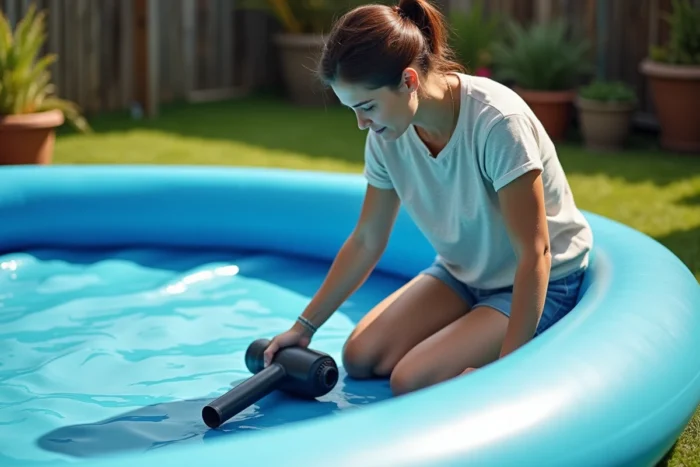
Inflating an inflatable pool with a hairdryer takes between a few minutes and a good quarter of an hour depending on the size of the pool and the method used. The time difference mainly depends on two variables: the air flow of the device and the tightness of the improvised connection between the nozzle and the valve. Comparing these parameters allows you to choose the right approach before plugging anything in.
Air Flow and Valve Diameter: What Determines Inflation Time
A household hairdryer blows a volume of air much lower than that of a dedicated electric pump. The difference is felt within the first few seconds: air escapes around the valve if the connection is not adjusted.
The technical point to address first is the fit between the hairdryer nozzle and the pool valve. On most inflatable pools (Bestway, Intex, or other brands), the valve measures a few centimeters in diameter. The outlet of a hairdryer is wider. Without an adapter, a significant portion of the air blows past.
The most common solution is to cut the neck of a plastic bottle to create an inverted funnel. The wide side fits over the hairdryer nozzle, and the narrow side inserts into the valve. A wrap of tape is enough to hold everything in place. This DIY solution significantly improves inflation efficiency because it channels the entire air flow into the inflatable ring.
Knowing how to inflate a pool with a hairdryer relies primarily on this connection step: without it, the inflation time easily doubles.
| Criteria | Hairdryer with bottle adapter | Hairdryer without adapter | Inflation by mouth |
|---|---|---|---|
| Connection tightness | Good (air channeled) | Poor (side leaks) | Variable (quick fatigue) |
| Physical effort | None | None | Very high |
| Overheating risk | Moderate (monitor) | Moderate (monitor) | None |
| Suitable for large pools | Yes, with patience | Not very effective | No |
Hairdryer Settings: Cold Air, Maximum Speed
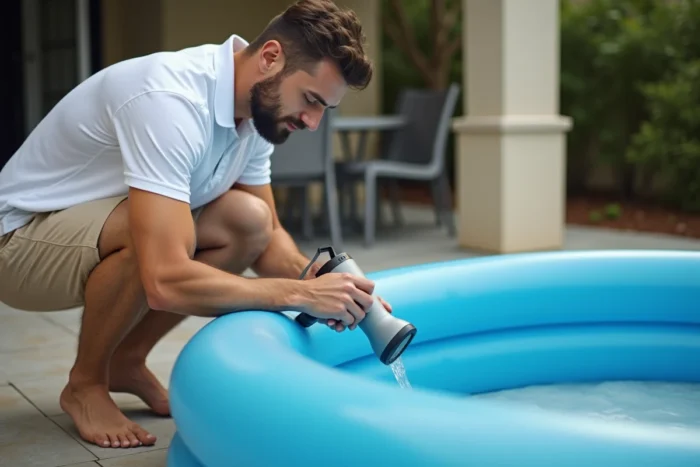
The common reflex is to push the hairdryer to the hottest setting to go faster. This is a mistake. Warm air does not speed up inflation and weakens the PVC of the inflatable pool.
The air flow depends on the speed setting, not the temperature. Setting the device to cold air and maximum speed produces the same volume of air per second as in hot mode, without risking damage to the material.
Why Heat is a Problem
The PVC of inflatable pools for children or family pools is thermally welded in the factory. Exposing the welds to a prolonged flow of hot air softens the material at the joints. On a ring already under pressure, this can cause micro-deformation, or even a leak at the valve.
Moreover, a hairdryer running continuously on the hot setting for more than a few minutes risks overheating. Most consumer devices have a thermal cut-off, but it’s better not to rely on this safety feature as the only protection.
- Always set the hairdryer to the cold air position (snowflake symbol or “cool”)
- Use the highest speed to maximize flow without heat
- Take breaks of a few minutes every five to seven minutes of continuous operation to avoid overheating the motor
Step-by-Step Inflation: Rings, Walls, and Finishing by Mouth
An inflatable pool is not just a single compartment. Common models have a top ring (the ring that maintains the structure) and sometimes a separate inflatable bottom. Each section has its own valve.
The most effective method is to first inflate the main ring with the hairdryer, then take care of the bottom if the model has one. The top ring should be firm but not fully stretched: leaving a slight give allows the PVC to expand in the sun without the risk of bursting.
Finishing by Mouth for the Last Few Percent
The hairdryer loses effectiveness as internal pressure increases. The last puffs of air pass poorly through the improvised adapter. At this stage, a few breaths by mouth are enough to achieve the desired firmness. This manual finishing takes less than a minute and gives precise control over the final pressure.
Close the valve immediately after the last breath. On flap valves (common on Bestway pools), push in the inner plug and then screw on the outer cap. On simple valves, pinch and fold before clipping.
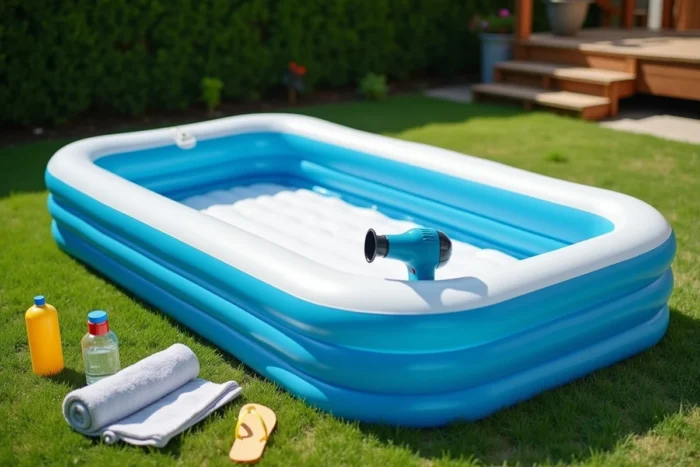
Common Mistakes That Extend the Inflation Time of an Inflatable Pool
Several bad habits turn a quick operation into a chore:
- Inflating the pool in direct sunlight: warm PVC sticks, valves slightly deform, and the ring seems soft even though it is properly inflated (the air will expand further with heat)
- Using a low-power hairdryer (travel type): the air flow is too low to fill a family pool in a reasonable time
- Forgetting to check the valves before inflation: a poorly engaged flap continuously leaks air, negating the work of the hairdryer
- Overinflating the ring: excessively stretched PVC bursts more easily, especially after exposure to the sun
The ideal inflation takes place in the shade or at the end of the day. A ring inflated in the shade will appear firmer once the pool is set up in the sun, because the air expands with the ambient temperature.
The hairdryer remains a handy tool that does its job well when lacking an electric pump or manual inflator. The plastic bottle adapter makes all the difference between a laborious inflation and a quick setup. The only precaution to remember: cold air, maximum speed, and do not overinflate.