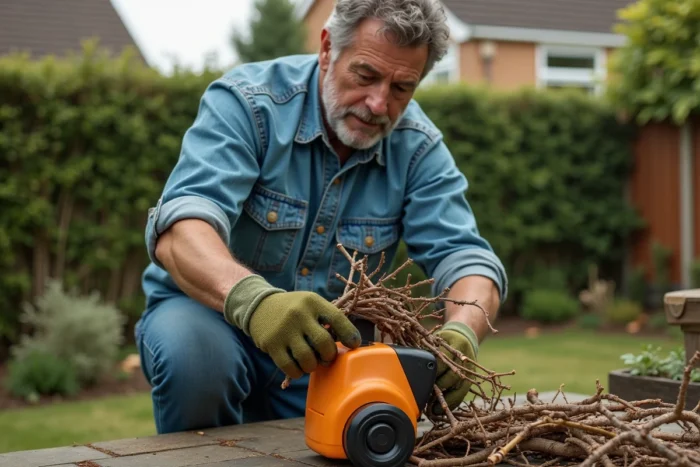
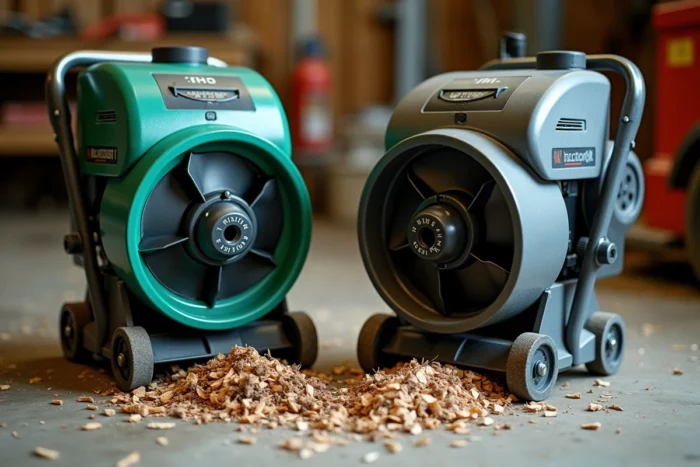
The Bosch AXT 25 D and the Bosch AXT 25 TC share the same 2500 W motor and the same design, but their cutting systems are intended for different uses. The AXT 25 D relies on a crushing rotor that grinds hard branches through compression. The AXT 25 TC features a Turbine Cut system, designed to combine the advantages of blades and the rotor to handle both dry wood and soft plant materials.
Understanding this difference in mechanism allows you to choose the shredder suited to what your garden actually produces, not just what the technical sheet indicates.
Cutting system rotor vs Turbine Cut: what changes in the collection bin
The rotor of the AXT 25 D operates by crushing. A steel blade rotates slowly and presses branches against a compression plate. The resulting mulch is coarse, irregular, suitable for thick mulching or slow composting. This system excels on hard, dry wood, with a moderate noise level compared to fast blade shredders.
The Turbine Cut of the AXT 25 TC adopts a different principle. The turbine combines a cutting and pulling action that chops plant materials more finely. The mulch is more homogeneous, which speeds up decomposition in compost.
The practical distinction comes into play with soft green waste: pruning of laurels, young bamboo shoots, perennials, dense foliage. The classic rotor of the AXT 25 D tends to clog when the proportion of soft plant materials exceeds a certain threshold. Fibers wrap around the mechanism and cause jams.
The Turbine Cut limits jams on mixed branches and foliage, reducing work interruptions. For a garden that mainly produces pruning waste (fruit trees, hornbeam hedges, dry branches), the AXT 25 D is sufficient. For a mixed garden with flower beds, evergreen hedges, and dense foliage shrubs, the TC wins in versatility.
A comparison between Bosch AXT 25 D and TC details the technical specifications of each model to refine this choice based on the diameter of branches to be processed.
Bosch AXT 25 D: for what type of garden
The AXT 25 D is a rotor shredder positioned for medium to large gardens, with a regular production of pruning waste. Its strong point remains its ability to effortlessly consume relatively thick branches, thanks to the slow crushing mechanics.
Concrete advantages of the crushing rotor
- Reduced noise compared to fast blade systems, allowing work without disturbing the neighbors during wider time slots
- Limited maintenance: the rotor blade wears slowly and does not require frequent sharpening, unlike the blades of turbine shredders
- Coarse mulch ideal for mulching paths, hedge bases, or shrub beds where rapid decomposition is not sought
The downside becomes evident when the collection bin fills with fibrous and moist material. Spring prunings (roses, laurels, bamboo) cause slowdowns, sometimes complete stops. It is then necessary to reverse the rotation to clear the jam, which disrupts the work rhythm.
Bosch AXT 25 TC: the versatility of the Turbine Cut system
The AXT 25 TC stands out for its ability to absorb a continuous flow of varied plant materials. The turbine draws waste into the cutting mechanism, reducing the need to manually push branches into the funnel.
What the turbine changes in daily use
During a typical shredding session, mixing dry hazel branches with green privet shoots poses no problem for the TC. The rotor of the AXT 25 D, in the same situation, requires sorting the plant materials and alternating hard and soft wood to avoid clogging.
The finer mulch from the TC decomposes faster in compost. For gardeners who use mulch as organic amendment rather than decorative mulch, the fineness of the Turbine Cut mulch accelerates the return to the soil.
The downside: the Turbine Cut system puts more strain on the cutting parts. The blades wear out faster on very hard and dry wood. The cost of replacing the blades exceeds that of the single blade of the rotor on the AXT 25 D.
Choosing between AXT 25 D and AXT 25 TC based on your green waste
The choice criterion is not limited to power (identical on both models) or the maximum diameter of branches accepted. The real question concerns the composition of the green waste produced by your garden throughout the seasons.
- Garden mainly composed of fruit trees, deciduous hedges, hardwood trees: the AXT 25 D handles this type of production effortlessly and with lower maintenance costs
- Mixed garden with evergreen hedges (laurel, thuja), perennial flower beds, bamboo, ornamental grasses: the AXT 25 TC avoids repeated jams on soft plant materials
- Intensive use on large quantities in a single session: the TC’s suction system maintains a more consistent flow and reduces operator fatigue
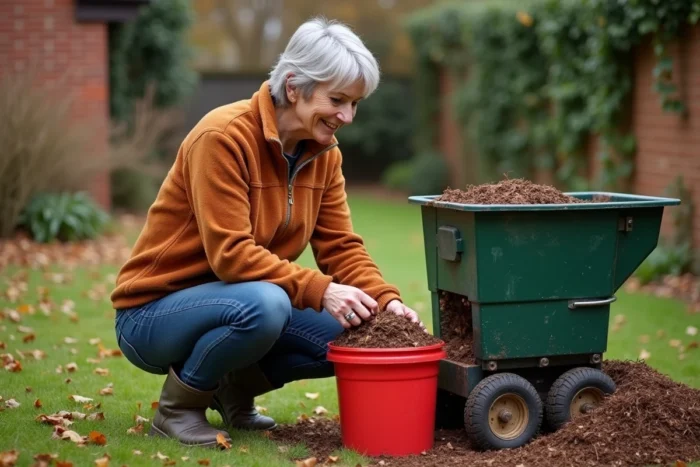
The purchase price of the AXT 25 TC exceeds that of the AXT 25 D. But the time saved on each shredding session and the reduction in unjamming interventions compensate for this difference for gardens with high production of mixed green waste.
The choice comes down to a question of volume and nature of the plants. A garden that mainly produces dry wood does not justify the extra cost of the Turbine Cut system. A garden where the pruning of evergreen hedges and waste from flower beds represents half of the annual volume benefits significantly from the versatility of the TC.