Buying a house in Thailand for around 7,000 euros is a project that circulates widely among French expatriate communities. The budget seems ridiculous compared to real estate prices in France. But behind this attractive figure, several legal and practical realities turn the dream into an obstacle course if not anticipated.
Land Ownership in Thailand: What a Foreigner Cannot Buy
You’ve spotted a plot of land with a small house in Isan or near Chiang Rai for a few thousand euros. The price is real. The trap is too.
Thai law prohibits foreigners from owning land in their own name. You can buy the building, the physical structure of the house. The land it sits on, no.
Three arrangements exist to circumvent this restriction:
- Sign a 30-year leasehold on the land, renewable under certain conditions, while purchasing the house separately.
- Create a Thai Limited Company that holds the land, with majority Thai shareholders. This arrangement is legal but increasingly scrutinized by the authorities.
- Buy the land in the name of a Thai spouse, with a written waiver of any rights to the land. In case of separation, the land remains with the spouse.
Each of these options carries concrete legal risks. The 30-year lease, for example, is not automatically renewed: it depends on the will of the landowner. As for the Thai company, controls have tightened to detect arrangements where Thai shareholders are merely figureheads.
Before committing any funds, several expatriates who have shared their experiences on forums recommend consulting a lawyer specialized in Thai real estate law, not a real estate agent. To explore the strategies for a house in Thailand for 7,000 euros, understanding these land constraints is the first step.
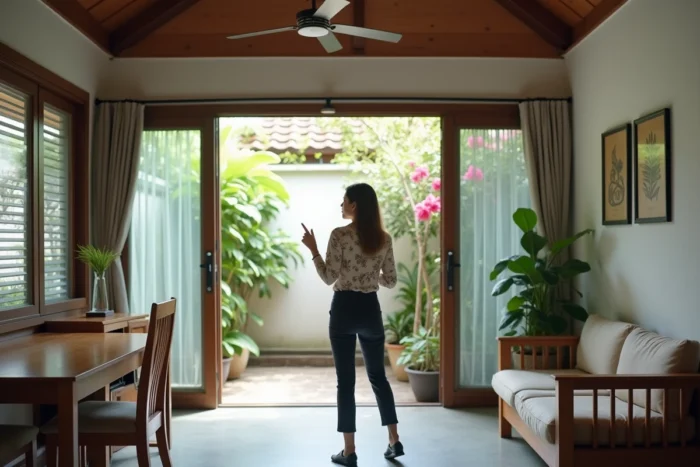
Real Budget for Living in Thailand Daily with Low-Cost Housing
Assuming the house is purchased, the legal arrangement secured, and the notary and registration fees paid. You’ve spent around 7,000 euros for the structure. How much do you need each month to live?
The cost of living varies greatly by city. Bangkok is significantly more expensive than Chiang Mai or Pattaya. In rural areas of Isan or the north, the monthly budget can drop well below that of a tourist city.
Some expense categories to consider:
- Local food (markets, street food) remains very affordable. Cooking at home with market products costs a fraction of the French food budget.
- Electricity can rise quickly if you use air conditioning constantly, especially between March and May.
- Private health insurance is often an underestimated expense. The Thai hospital system is efficient, but care in international private hospitals is charged at high rates without coverage.
- High-speed internet is available in most urban and semi-urban areas at moderate rates.
A tight but realistic monthly budget is around 1,500 euros for a couple in a non-tourist area, excluding mortgage repayment since the house is paid for. This figure includes food, local transport, electricity, internet, and basic health insurance.
Long-Term Visa and Stricter Immigration Controls
Owning a house in Thailand does not grant any residency rights. This is a point that many expatriation candidates discover too late.
To stay legally in the country, you need an appropriate visa. The standard tourist visa allows for a limited stay, and Thai authorities have tightened their stance on repeated stays with this type of visa. Nearly 30,000 foreigners were denied entry between January and May 2026, as part of the strategy dubbed “Three No’s” (no entry, no stay, no escape).
This policy specifically targets profiles that repeatedly come and go with tourist visas to effectively live in the country without legal status. Basing a life project in Thailand on this scheme has become risky.
Visa Options for an Extended Stay
The retirement visa (O-A or O-X) requires proof of a certain amount in a Thai bank account or a regular monthly income. The Elite visa, more expensive, offers a long-term stay without income conditions but represents a significant investment. The work visa (Non-B) assumes a declared job with a registered company in Thailand.
The choice of visa determines the entire viability of the project. Without a permanent residency status, the house for 7,000 euros becomes inaccessible for part of the year.
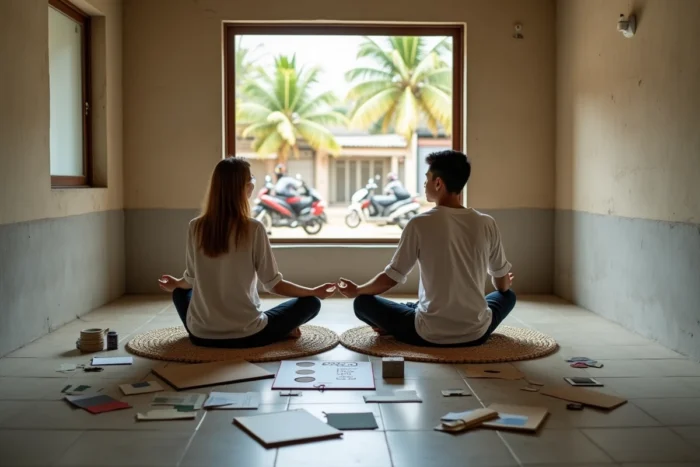
Maintenance of a Low-Cost House in a Tropical Climate
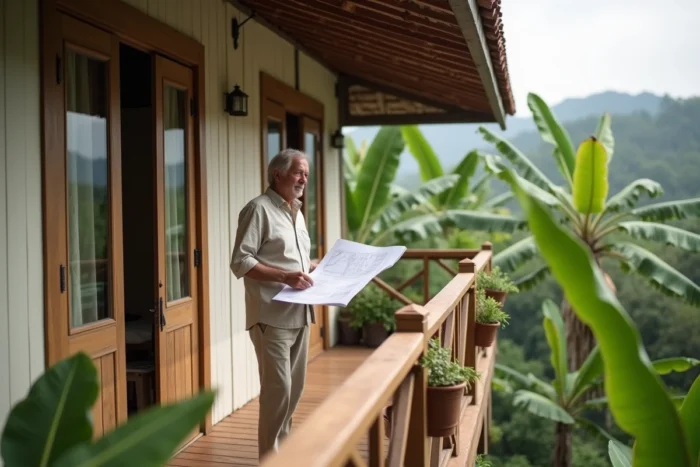
Why is this topic rarely addressed in expatriation guides? Because it’s not appealing. A house bought for a few thousand euros in rural Thailand is often a lightweight construction, made of wood or concrete blocks, with a tin roof.
The tropical climate imposes specific maintenance constraints. Humidity during the rainy season (May to October in most regions) promotes mold, rust, and degradation of wooden structures. Termites are a recurring problem in low-cost constructions.
Planning an annual maintenance budget from the outset avoids unpleasant surprises. Termite treatment, roof repairs, and replacement of carpentry: these costs, even modest in Thailand, accumulate if the house has not been inspected before purchase.
A rarely mentioned point: check access to running water and electricity from the grid. In some remote rural areas, the house may depend on a well and precarious electrical connections. The cost of bringing these up to standard can then exceed the initial purchase price.
Living in Thailand with a house for 7,000 euros remains an accessible project, provided you address the land issue with a lawyer, secure an appropriate long-term visa, and budget for maintenance from the start. The purchase price is just the visible part of a project that requires methodical preparation in both legal and practical terms.