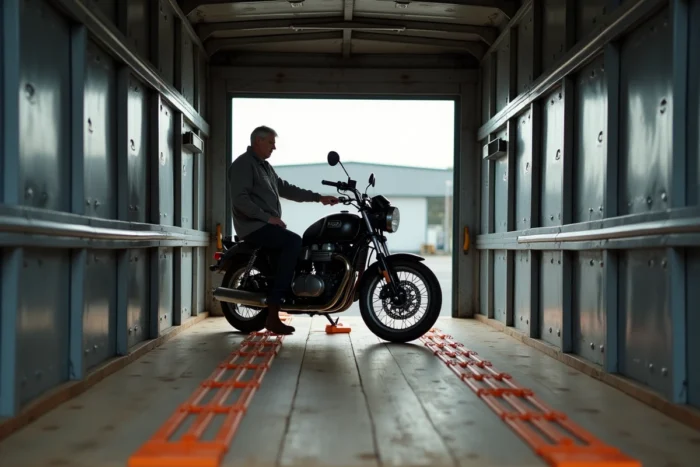
A rented motorcycle transport truck without prior verification of the securing, insurance coverage, and receipt protocol turns a routine transport into an expensive dispute. Before loading, we recommend addressing three points that most rental offers do not mention in their general conditions: the securing method, the exact scope of the warranty, and the drafting of reservations at both pickup and return.
Securing on motorcycle transport truck: rail, straps, and anchor points
A bare platform with two crossed straps is not enough. Securing with four straps and the front wheel locked in a rail is the standard practice to neutralize lateral and longitudinal movements during transport. Without a rail, the front wheel pivots at the first hard braking, and the motorcycle tips over.
The locking rail is fixed to the truck floor and keeps the front wheel in vertical compression. The two front straps, arranged in an inverted V from the handlebars or fork plates, press the suspension down. The two rear straps anchor to the frame or footpegs, never to plastic parts or fairing elements.
Upon taking possession of the vehicle, we systematically check for the presence and condition of the following elements:
- Front wheel rail screwed to the floor (not just placed), with width suitable for the tire
- Four ratchet straps with sufficient holding capacity, without fraying or deformation of the hooks
- Anchor points welded or bolted to the platform chassis, evenly distributed around the motorcycle location
- Rear wheel chocks if the platform does not have a second rail
Choosing a easy motorcycle transport truck rental only makes sense if the securing equipment is included and functional at the time of departure. A rental company that provides the vehicle without a rail or suitable straps effectively transfers the responsibility for securing to you.

Motorcycle transport insurance: what the rental contract actually covers
The damage coverage of the rental contract covers the truck, not the motorcycle loaded on it. The distinction is clear and often misunderstood. The rented vehicle benefits from mandatory liability insurance and, depending on the options, collision or theft coverage. The transported motorcycle falls under a different regime.
Three scenarios arise depending on the contracts:
- Your own motorcycle insurance includes a “third-party transport” clause that covers damages during transport, including on a platform
- The rental company offers an “insured goods in transit” extension charged as an extra, with a compensation ceiling often well below the actual value of a sports or collectible motorcycle
- No coverage exists for the contents of the truck, and you drive at your own risk
A rarely mentioned point in the general conditions concerns coverage during vehicle parking. The risk of theft while hitched or on a platform at rest is only covered if the theft coverage also applies when not in motion and if the contractual conditions are met (vehicle locked, parked in a secure location). A stop at an open highway rest area may be enough to exclude coverage.
We recommend contacting your motorcycle insurer before renting to request a written certificate of coverage in transport. Then compare it with the extension offered by the rental company. The cost of the premium remains marginal compared to a total loss on an uncovered claim.
Closed trailer or open platform: the impact on coverage
The choice between a closed trailer and an open platform is not solely about comfort. A closed trailer protects against weather, debris, and theft, which more easily satisfies the conditions for activating theft coverage while stationary. An open platform, even if tarped, keeps the motorcycle visible and accessible, which some insurers consider a lack of precaution.
For a high-value motorcycle (recent sports model, collectible), a closed trailer is not a luxury but a condition for effective coverage.
Receipt reservations: the document that protects before and after the trip
Loading the motorcycle without formalizing its condition means giving up any subsequent claims. A receipt without written reservations closes the door to claims, regardless of any damage discovered later. This principle applies to both private rentals and professional carriers.
Before departure, we conduct a joint inspection of the motorcycle in the presence of the driver or rental manager. Each pre-existing defect (scratch, dent, missing part) is noted in writing on the pickup document, accompanied by time-stamped photographs. The same protocol applies upon arrival.
Drafting actionable reservations
A vague mention like “some scratches” is worthless in case of a dispute. Reservations must be precise: location of the damage (left side of the tank, end of the clutch lever), nature (scratch, dent, crack), and approximate size.
Photographing each damage from two angles with a reference object for scale constitutes the best evidence in case of contestation. These photos should be emailed to the rental company on the same day to establish a certain date.
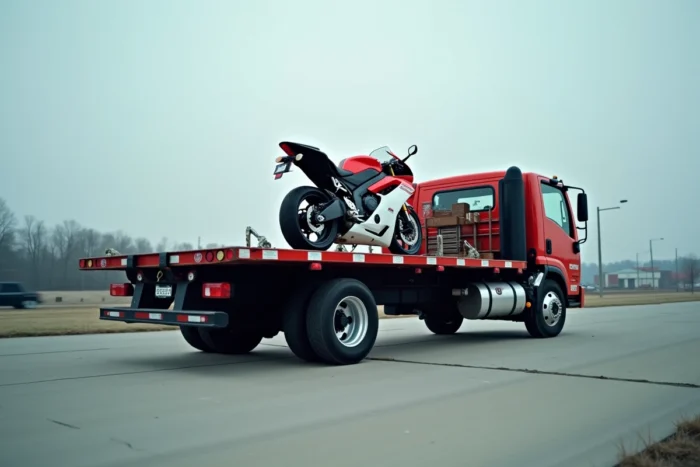
Choosing the motorcycle transport truck: size and driving license
The type of license conditions the size of the vehicle. A category B license limits the GVW to 3.5 tons, which covers most flatbed vans and small carriers with a ramp. Beyond that, a C1 or C license becomes mandatory, and the rental conditions change (minimum age, experience, medical check).
For a single motorcycle, a large-volume van with an integrated ramp or a small platform with a tailgate is more than sufficient. The weight of the motorcycle (rarely exceeding a few hundred kilos) does not pose a problem for payload, but the length of the platform must allow for a reasonable ramp angle to avoid scraping the underbody or engine guard during loading.
The interior height of the van also deserves attention: a high handlebar (custom, trail) may hit the ceiling if the vehicle is not sized correctly. Measuring the motorcycle on its stand with its accessories before booking avoids an unnecessary round trip to the rental agency.
The peaceful transport of a motorcycle by rental truck relies on three verifiable pillars before departure: complete mechanical securing with rail and four straps, confirmed written insurance coverage for the transported contents, and a joint inventory with detailed reservations. Neglecting any one of these points turns a simple operation into a source of financial conflict.