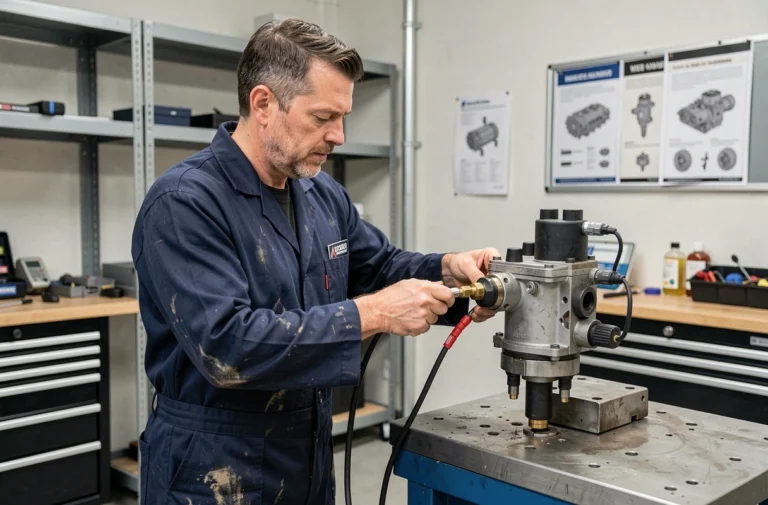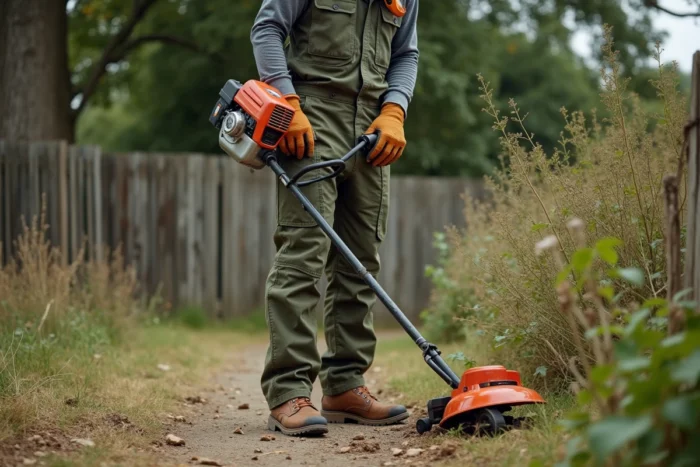
The market for thermal brush cutters remains dense, with engine displacements ranging from lightweight models around 25 cm³ to professional machines exceeding 45 cm³. In light of this offering, the selection criteria vary according to the nature of the terrain, frequency of use, and type of vegetation to be managed.
Operating hours: the criterion that product sheets do not display
When comparing two thermal brush cutters, the reflex is to look at power, weight, and sometimes price. The operating hours before a major overhaul rarely appear in commercial descriptions. Yet, this is what separates a profitable purchase from a premature replacement.
Feedback from landscaping networks and manufacturers like Stihl or Husqvarna indicates that a professional brush cutter around 45 cm³ reaches 2,500 to 3,000 hours before a major engine overhaul. A semi-professional model tops out between 800 and 1,200 hours.
For an individual using their machine for about twenty hours per season, the difference may seem trivial. It becomes significant when maintaining a plot of several thousand square meters or considering gardening as a supplementary income activity.
When calculated per hour of use, a more expensive professional model can be cheaper than a semi-pro replaced twice in the same period. The comparisons available on top-debroussailleuse-thermique.com allow for cross-referencing these technical data with current price ranges.
Engine displacement and conical torque: what raw power does not reveal
The engine displacement remains the primary indicator of power on a thermal brush cutter. Entry-level models hover around 25 cm³, sufficient for tall grass and edging finishes. Beyond 35 cm³, we move to machines capable of tackling brambles, woody shoots, and thick underbrush.
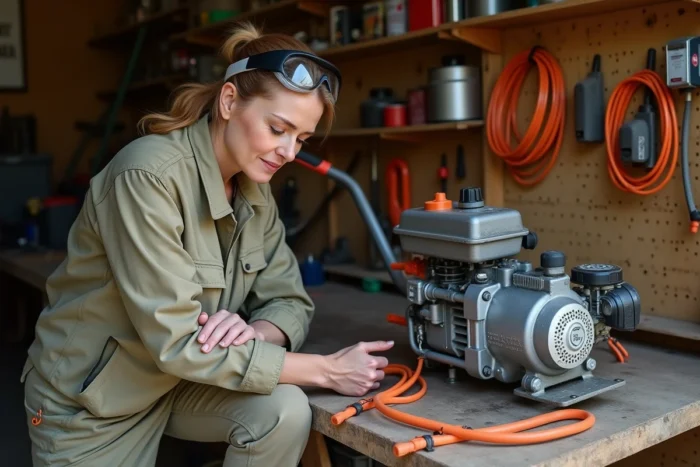
Displacement alone is not enough to assess actual cutting capacity. The conical torque, this transmission piece located at the junction between the shaft and the cutting head, plays a crucial role. An undersized conical torque on a powerful engine leads to efficiency loss and accelerated wear of the transmission.
Field feedback varies on this point according to brands, but one rule remains reliable: the diameter of the conical torque must be proportionate to the engine displacement.
2-stroke or 4-stroke engine for a garden
The 2-stroke engine dominates the market for portable thermal brush cutters. It offers a favorable power-to-weight ratio and a simpler maintenance mechanism. The 4-stroke engine, less common in this segment, consumes less fuel and produces fewer vibrations, but it adds weight to the machine.
For typical garden use (seasonal maintenance, occasional brambles, tall grasses), the 2-stroke engine remains the most versatile choice. The 4-stroke is more justified for long and regular sessions where fatigue from vibrations becomes a limiting factor.
Cutting system: line, blade, or disc depending on the vegetation
The choice of cutting system directly affects the machine’s efficiency in the field. Three main categories coexist, each suited to a specific type of vegetation:
- The nylon line head is suitable for tall grasses and finishing along fences or flower beds. It remains the most common and least expensive system in consumables, but it shows its limits on woody stems.
- The three or four-tooth blade tackles brambles, thick nettles, and young shrub shoots. It requires regular sharpening and increased caution when used near stones or walls.
- The tungsten disc, reserved for higher displacement brush cutters, allows for cutting stems several centimeters in diameter. Its use is more about clearing than regular maintenance.
A often overlooked point: the compatibility between the cutting system and the conical torque of the machine. Mounting a heavy disc on a model whose transmission is not designed to handle shocks reduces the lifespan of the entire mechanism. Checking the manufacturer’s recommendations before changing the cutting head avoids costly repairs.
Ergonomics and harness: weight, shaft, and handle of the thermal brush cutter
The weight of a thermal brush cutter varies significantly from model to model. During sessions longer than an hour, physical fatigue depends less on the gross weight than on the distribution of the load and the quality of the harness.
A simple strap harness is sufficient for short uses. For prolonged sessions or sloped terrains, a forestry-type harness distributes the weight across the hips and shoulders, reducing tension on the back and arms. This type of harness often includes a quick-release system, useful in case of imbalance on uneven ground.
Handle type and maneuverability
Thermal brush cutters come in two main handle configurations:
- The handlebar (often called “bicycle”) handle favors wide sweeping movements on flat terrain. It is suitable for large open areas.
- The loop (or D) handle offers more maneuverability in cluttered spaces, around trees, along walls, or on slopes.
The type of shaft also influences comfort. A straight shaft transmits power better, while a curved shaft eases the working posture for low finishes. The choice depends on the terrain configuration.
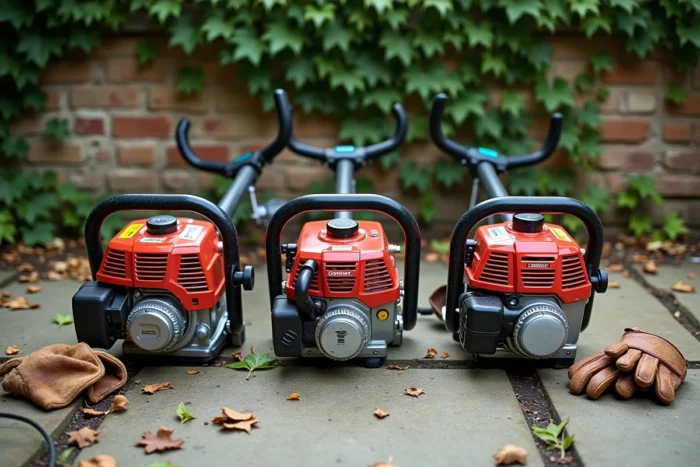
Regular maintenance of the air filter, spark plug, and cutting system extends the machine’s lifespan well beyond the manufacturer’s averages. On a thermal brush cutter, a clogged filter can lead to excessive fuel consumption and a noticeable loss of power from the first hours of neglect. Choosing a model whose wear parts remain available for several years after purchase is the best guarantee against premature obsolescence.