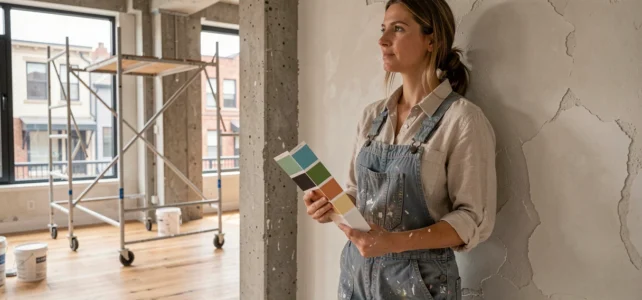
Furnishing and renovating a house in 2024 is no longer just about choosing a color palette or flooring. The regulatory framework, public aid schemes, and energy constraints are reshaping homeowners’ priorities. Which renovation areas are actually concentrating budgets, and which design trends withstand analysis once the effects of fashion are set aside?
Major Renovation in 2024: What Public Data Reveals
The standout fact of 2024 in home renovation does not come from decoration magazines. It comes from the figures from the Ministry of Ecological Transition: MaPrimeRénov’ applications per action have halved compared to 2023, following a tightening of eligibility conditions.
In contrast, large-scale renovations supported by Anah have significantly increased. Public authorities have clearly redirected aid towards comprehensive heavy renovations, combining insulation, heating, and ventilation, to the detriment of isolated interventions such as just changing windows.
| Type of Renovation | Change in 2024 | Relevant Aid |
|---|---|---|
| Action-based renovation (windows, attics only) | Significant decrease (about half of 2023 applications) | Classic MaPrimeRénov’, tightened conditions |
| Large-scale renovation (envelope + heating + ventilation) | Marked increase | MaPrimeRénov’ Ampleur, increased spending caps |
The MaPrimeRénov’ Ampleur scheme targets poorly insulated homes, with high coverage rates to allow gains of three to four energy performance certificate (DPE) classes. For homeowners considering renovating their home at Salon Tendances Habitat, this shift changes the very logic of the project: renovations are no longer done room by room; the entire building envelope is addressed.
Interior Design: Measurable Trends vs. Fads
In terms of interior design and decoration, not all trends carry the same weight. Some correspond to structural changes in lifestyles, while others are part of the seasonal cycle of magazines.
Multipurpose Spaces and Open Living Areas
The demand for modular spaces remains the most documented trend. Remote work, even part-time, has permanently changed the use of rooms. An office integrated into the living area, an open kitchen that also serves as a family meeting room: the versatility of spaces is no longer a luxury but a functional constraint.
Movable partitions, retractable storage, and dual-function furniture are found in the majority of interior design projects. This is not a passing trend; it is an adaptation to the cost of square meters.
Natural Light and Thermal Comfort
Natural light has become a selection criterion on par with usable space. Renovation projects systematically include enlarging openings or adding skylights, not only for ambiance but also to reduce electricity consumption.
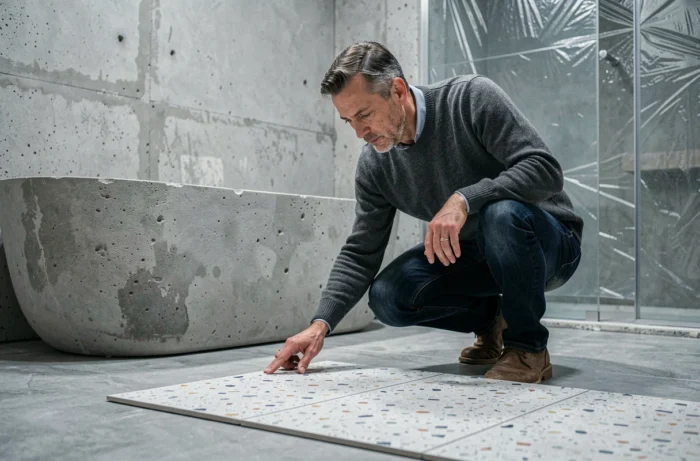
Thermal comfort now takes precedence over pure decoration. A homeowner deciding between an aesthetic polished concrete floor and a high-performance insulating floor increasingly opts for the latter, especially when financial aids cover part of the extra cost.
Renovation Materials: What is Progressing and What is Declining
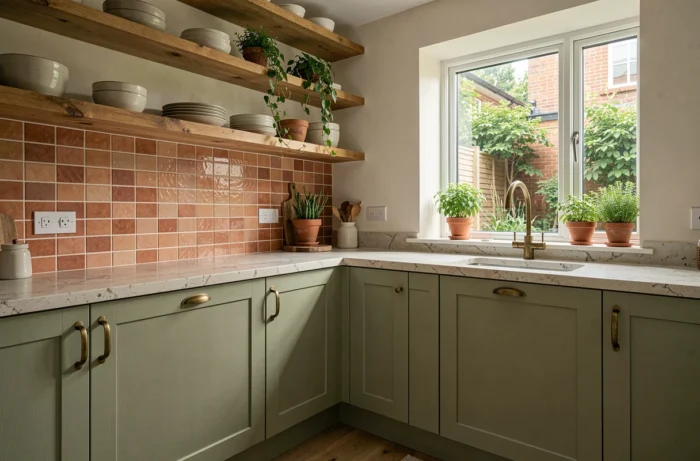
Natural materials (wood, stone, terracotta) have dominated the decor discourse for several seasons. Analysis of actual projects shows that this trend is confirmed, but with nuances that decoration articles often overlook.
- Bio-based insulators (wood fiber, hemp wool) are gaining market share because they are now eligible for large-scale renovation aids, not just for aesthetic reasons.
- Natural stone remains popular for interior cladding, but its installation cost and weight limit its use to wet rooms and specific elements (backsplashes, window sills).
- Recycled materials and upcycling are progressing in interior decoration projects, driven by environmental sensitivity but also by the rising cost of new materials.
The choice of materials in 2024 is guided as much by eligibility criteria for aids as by personal taste. A high-performance insulator qualifies for a grant, while trendy tiles do not.
Colors and Atmosphere: Palettes That Establish Themselves Durably
Earthy tones (brown, ochre, sand) and shades of green dominate the 2024 palettes for interior decoration. This orientation towards natural colors is not arbitrary: it accompanies the increasing use of raw materials and organic textures.
In contrast, pastel colors, which were prominent in trends announced at the beginning of the year, are mainly found in small rooms and accessories. Large painted surfaces favor neutral and warm shades that age better and adapt to changes in furniture without needing a complete redo.
Lighting plays a crucial role in the final rendering of these palettes. A cold light (cool white LED) cancels out the warm effect of brown tones. Successful design projects combine abundant natural light with warm temperature accent lighting.
Home Automation and Connected Homes: Real Adoption or Recurring Promise
The smart home has been a trend in renovation for a decade. In 2024, adoption remains focused on three concrete uses:
- Remote heating control (connected thermostat), often installed as part of a comprehensive energy renovation.
- Automated roller shutters, which contribute to summer thermal comfort.
- Programmable lighting, which allows for adjusting the lighting ambiance room by room without heavy electrical intervention.
The most adopted home automation systems are those related to energy performance, not pure comfort gadgets. The connected thermostat pays for itself in a few heating seasons; the voice assistant integrated into the walls, much less so.
The renovation budget for a house in 2024 is viewed through two overlapping grids: that of life projects (layout, decoration, daily comfort) and that of public schemes that direct spending towards energy performance. Homeowners who integrate these two dimensions from the project’s conception achieve a better return on investment, both in comfort and property value.